

Introduction
Document checks are a critical part of identity verification processes across government, financial and security sectors. Despite the availability of professional tools and established procedures, mistakes in document checks remain common. These errors significantly increase the risk of accepting forged or altered documents. Understanding where document checks fail is therefore essential for effective document authentication. This article outlines the most common mistakes in document checks and explains how they can be avoided.
Overreliance on visual inspection
One of the most frequent mistakes in document checks is relying solely on visual inspection. While visual checks are an important first step, they cannot reveal hidden security features or subtle alterations.
Visual-only inspection fails to detect:
- UV-reactive inks and fibres
- IR-reactive security elements
- Chemical alterations to paper or ink
This limitation is also highlighted in visual authentication vs digital authentication.

Using inappropriate or consumer-grade tools
Another common issue is the use of tools that are not designed for professional document authentication. Consumer-grade UV lights or improvised inspection devices often produce unreliable results.
Problems with inadequate tools include:
- Incorrect wavelengths
- Uneven illumination
- Lack of optical filters
Professional equipment such as UV flashlights and IR cameras is essential for accurate inspection.
Ignoring document variation and updates
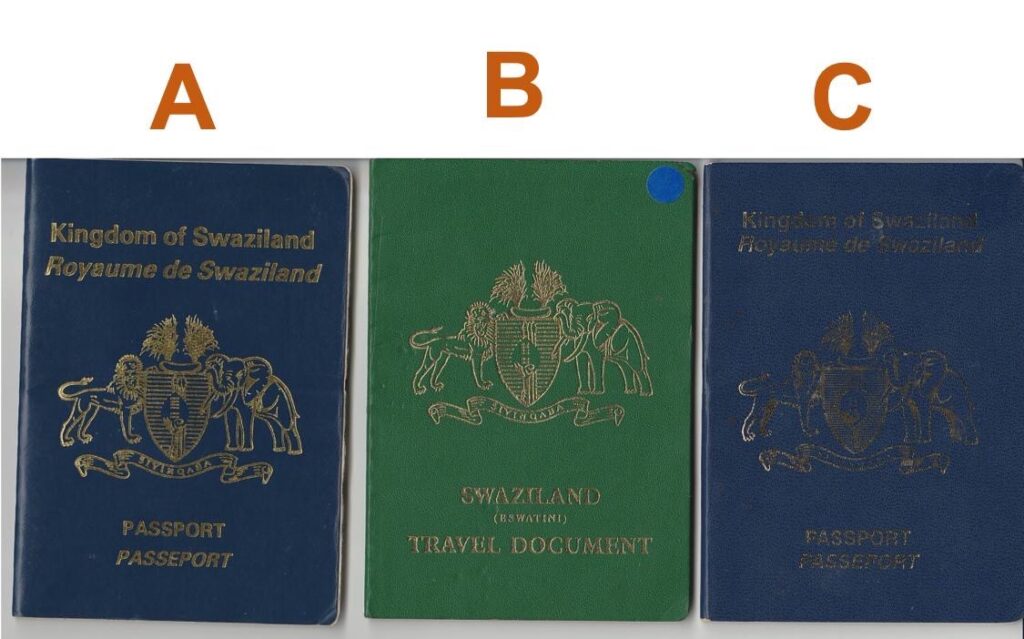
Identity documents evolve over time. New versions may contain updated layouts, security features or materials. Inspectors who rely on outdated knowledge may misinterpret genuine documents as fraudulent, or vice versa.
This mistake often occurs when:
- Reference materials are outdated
- Training is not refreshed regularly
- Document variants are not recognised
Staying informed about trends in identity and document fraud helps reduce this risk.

Skipping UV and IR inspection steps
Under time pressure, inspectors may skip UV or IR inspection steps. This significantly weakens the document check process.
Skipping these steps can result in:
- Undetected forged security features
- Missed chemical alterations
- Failure to identify altered personal data
UV and IR inspection are core components of professional document authentication workflows.
Misinterpreting security features
Security features must be interpreted correctly. Misunderstanding how genuine features behave under different inspection methods leads to false conclusions.
Common interpretation errors include:
- Expecting identical UV responses across document versions
- Confusing background printing with damage
- Misreading laser engraving depth
These challenges are addressed in authentication of security features in passports.
Lack of structured procedures
Inconsistent procedures are a major contributor to errors in document checks. Without a standard workflow, inspection results vary between inspectors and locations.
A lack of structure leads to:
- Incomplete inspections
- Inconsistent decision-making
- Poor documentation
Structured workflows are a key element of professional identity document authentication.
Insufficient training of personnel
Even the best tools are ineffective without trained users. Insufficient training remains one of the most significant weaknesses in document control environments.
Training gaps often include:
- Limited understanding of document structure
- Incorrect use of inspection equipment
- Inability to recognise subtle fraud indicators
This topic is explored further in training in document authentication: where to start.
Failure to escalate suspicious findings
Another common mistake is failing to escalate suspicious documents for further examination. Borderline cases are sometimes accepted due to uncertainty or operational pressure.
Escalation should occur when:
- Inspection results are inconclusive
- Multiple minor anomalies are present
- Document behaviour differs from reference samples
This principle is particularly relevant in how border control evaluates documents.
Conclusion
Mistakes in document checks are rarely caused by a single factor. They usually result from a combination of inadequate tools, insufficient training and inconsistent procedures. By recognising these common mistakes and addressing them systematically, organisations can significantly improve document authentication reliability and reduce fraud risks.
Dexeq advises government, financial and security organisations on professional UV flashlights, IR cameras and optical inspection tools for reliable document authentication. Contact Dexeq for expert guidance or a solution tailored to your operational requirements.